0
0Can Manufacturing Infrastructure
High-Speed Can-Making Lines Our production facility is equipped with 2 state-of-the-art, high-speed automated 3-piece can manufacturing lines imported directly from Taiwan, engineered for continuous, high-volume production with exceptional precision and structural integrity.
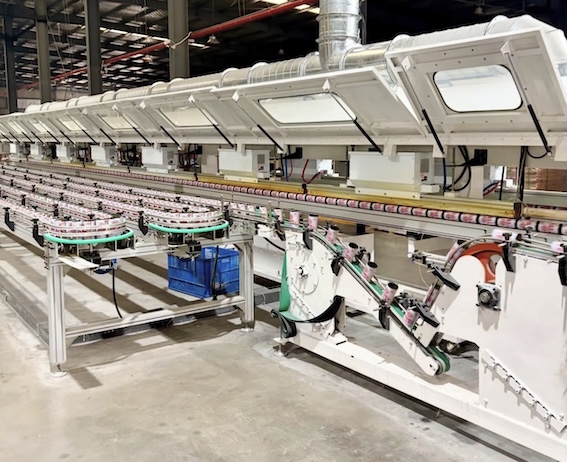
High-Efficiency Automated Production: Our Taiwanese high-speed forming lines integrate advanced mechanical synchronization and servo-driven controls, enabling continuous high-speed body forming, precision welding, flanging, and seaming to drastically shorten lead times.
Versatile Line Capabilities & Precision Tooling: Designed with quick-change tooling modules, these dual lines accommodate a broad range of 3-piece tin formats—including round, square, rectangular, and custom-shaped cans—while maintaining ultra-tight mechanical tolerances throughout the forming process.
3-Piece Can Manufacturing Process: Welding vs. Lock-Seam / Rolled Construction
Resistance Welded 3-Piece Can Characteristics
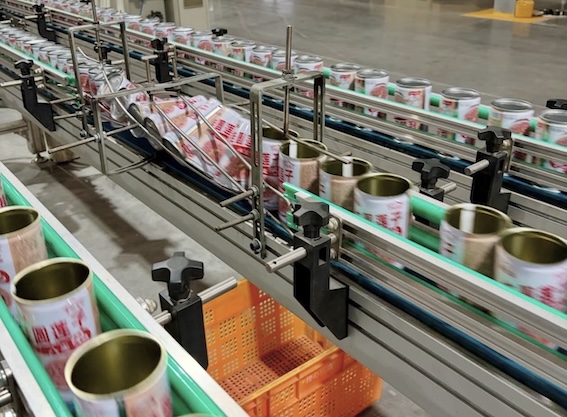
Superior Structural Integrity: Utilizing high-speed electric resistance welding, the body blank is fused into a continuous cylinder, providing maximum mechanical strength, high pressure resistance, and airtight sealing suitable for premium food, aerosol, and industrial tins.
Side-Seam Protective Coating: Immediately following welding, an interior side-stripe powder or liquid coating is applied over the seam and cured via induction heating, ensuring 100% corrosion resistance along the joint.
Lock-Seam & Rolled 3-Piece Can Characteristics
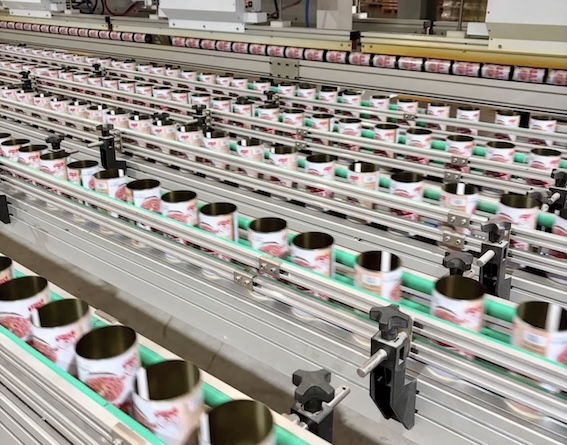
Decorative & Solder-Free Jointing: For specialty gift packaging, tea tins, and decorative containers, the body sheet edges are mechanically hooked, folded, or rolled tightly without welding, maintaining pristine external graphics along the seam line.
Cost-Effective Versatility: This technique allows flexible shaping—such as stepped covers or non-circular geometries—while eliminating thermal stress on sensitive exterior metallic finishes and decorative varnishes.
Standard 3-Piece Can Manufacturing Workflow
High-Speed Slitting & Blank Feeding: Printed and lacquered ETP or TFS metal sheets are fed into high-precision gang slitters, cutting them into perfectly aligned individual body blanks with burr-free edges to prepare for cylinder forming.
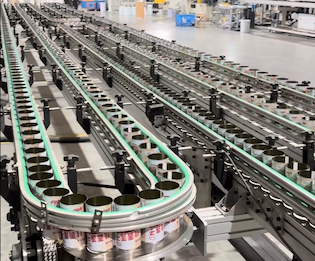
Body Cylinder Forming, Joining & Side-Seam Stripe:
Dimensional Accuracy: Body Seam Tolerance ≤0.08 mm
Blanks are wrapped into cylindrical or shaped profiles. For welded lines, edges are fused via high-speed resistance welding and sealed with an interior side-stripe coating; for lock-seam lines, edges are mechanically folded and pressed tight.
Necking, Flanging, Beading & Double Seaming:
Double-Seam Tightness: Overlap Rate ≥85%
Cans undergo necking, flanging, or ribbed beading to reinforce wall strength. High-precision double-seamer heads mechanically interlock the bottom end with the body flange. Every finished can passes through inline automated vision and pressure testing to ensure zero-defect delivery.