
Why Tin Packaging Is Used as a Material for Food
 Oct 27, 2026|
 View:36
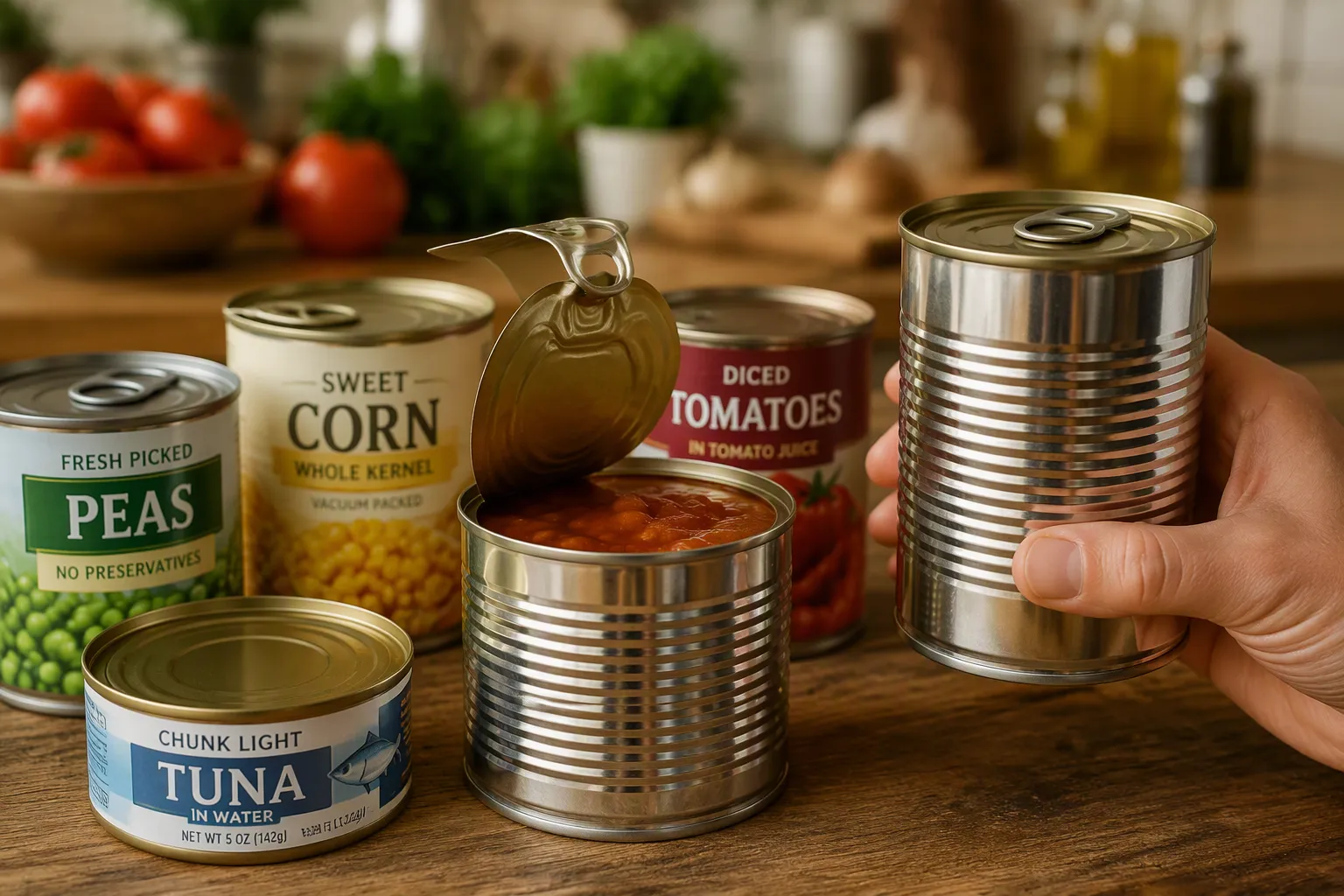
Tin packaging works well for food because the metal is non-toxic, non-reactive, and corrosion-resistant, and it protects quality over time. The tin layer keeps the steel body away from the contents, so acidic or salty foods stay safe and fresh. That protection explains why so many cans line store shelves today.
Shoppers trust these cans for good reason. The material blocks air, moisture, and light, and it holds up through shipping and storage. Food cans, beverage cans, easy-open cans, and specialty cans all rely on the same basic strengths. Tin simply does its job quietly and reliably.
Key Takeaways
Tin packaging keeps food safe because a special coating stops the metal from touching the food.
Tin cans have a tight seal that blocks air, light, and water, so food stays fresh for years.
Tin is easy to shape, print, and seal, which makes it perfect for fast food production.
Tin cans recycle again and again without losing quality, which helps the environment.
Choosing tin packaging means you get safe food, long shelf life, and a sustainable option.
Safe Tin Packaging for Food Contact
Safety starts at the surface. Food-grade tin plate and internal lacquers keep contents safe for direct contact, so the metal never touches what you eat. A thin, cured organic layer sits between the steel and the product. That layer does the real work in most food cans.
Food-Grade Coatings and Non-Toxicity
Tin itself is non-toxic. It does not react with acidic or salty foods in a harmful way. The bigger risk comes from the steel body underneath, so makers coat it. Two coating families dominate. Epoxy resin coatings meet FDA 21 CFR 175.300 and form a strong, inactive barrier between food and metal. Polyester (PET) coatings work as a BPA-non-intent option, follow FDA food-contact rules, and resist metal-food interaction while extending shelf-life.
Acidic products need extra care. Tin containers may hold acidic foods only when lined with a suitable protective coating that stops acid–metal reactions. Coating thickness matters too. Non-aggressive products usually use 4–6 µm, while tomato concentrate needs 8–12 µm to prevent interaction. AINISITELcan products use food-grade coatings and meet food safety standards, with internal lacquer options in gold, white, aluminum, or clear.
Regulators watch this closely. In the United States, processors of shelf-stable acidified and low-acid canned foods in hermetically sealed containers must register each establishment and file scheduled processes with the FDA for each product, container size and type, and processing method (21 CFR 108). The EU enforces similar standards and requires testing to confirm no harmful substances migrate into food.
Buyers can verify claims through migration tests, chemical stability tests, heavy metal analysis, BPA-free declarations, and third-party certifications such as SGS or Intertek reports. The Toxics Packaging Clearinghouse recommends combined lead, cadmium, mercury, and chromium at or below 100 ppm.
No Taste or Odor Transfer
A properly lacquered can protects flavor. The coating blocks direct contact between the metal and the contents, so nothing leaches in. That matters for aggressive products, where internal lacquering is the best solution to prevent or reduce detinning. It also matters for highly pigmented foods like beetroot and berry fruits, whose colors tin dissolution can bleach. Products such as sauerkraut, where the steel base corrodes directly, get added protection from the same layer.
Adhesion is the deciding factor. A coating that peels or blisters opens a path for reactions, and the food picks up a metallic note. Good adhesion keeps the barrier intact through retorting and handling. That is why metal cans from a reliable supplier hold their neutral taste profile across a long shelf-life, and why metal food packaging earns trust in sensitive food packaging applications.
How Tin Plate Cans Preserve Food
Airtight Seals and Barrier Protection
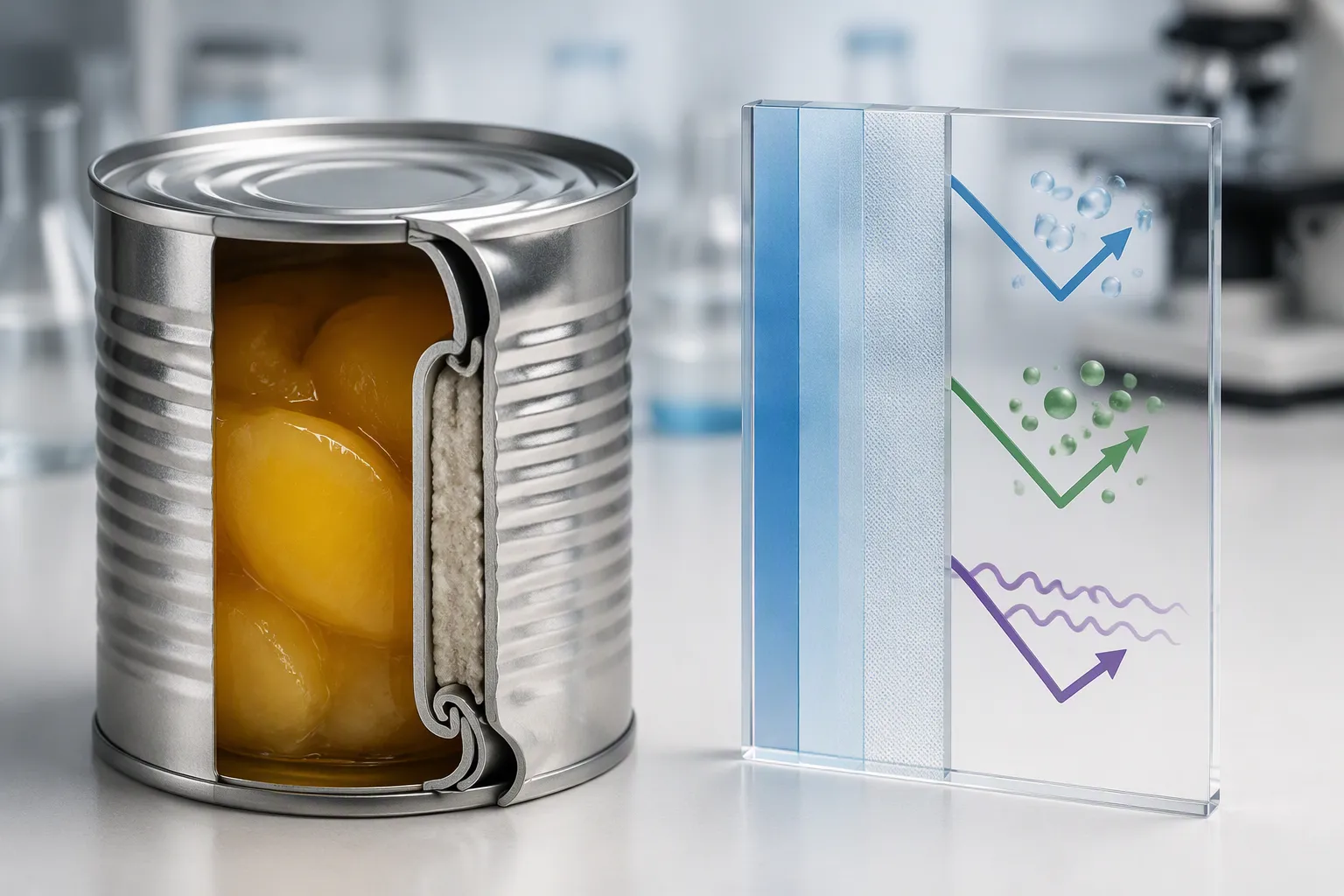
Keeping food fresh starts with a good seal. Metal cans are closed by a machine process called double seaming, not with glue. The seam is made tight by pressure and precision. The finished seam has five metal layers locked together (three from the lid, two from the can body). A sealing compound is added to finish the airtight barrier. Once sealed correctly, the can is closed tight right away. This protects the food from light and oxygen and gives it a long shelf life.
That idea is old. In 1809, Nicolas Appert noticed that food cooked inside a jar did not spoil unless the seals leaked. He then found a way to seal food in glass jars. Modern canning just made that idea better.
The strong walls do the rest. Tinplate makes a tight seal that keeps water vapor out of the container. This stops crackers, dried fruits, and powdered foods from getting soggy or spoiling. The tin coating's high contact angle lowers how much water and salt particles stick, so food stays dry even in humid places. Tinplate also blocks ultraviolet light, which keeps food from breaking down. The shell protects food from light, oxygen, and moisture, and tinplate cans block light and oxygen to keep flavor in. Together these walls make a closed system that keeps food apart from outside factors. It is a complete barrier against light, water, and air.
Barrier Property | What It Does |
|---|---|
Moisture barrier | Blocks water vapor; keeps crackers, dried fruit, and powders crisp |
UV/light barrier | Stops ultraviolet light from breaking food down |
Overall barrier | Isolates food from light, oxygen, and moisture |
Corrosion Resistance and Shelf Life
The tin coating on tin plate cans works like a raincoat that protects the steel. Tin reacts less easily than steel, and when it meets air it forms a dull oxide layer that slows more corrosion. As long as the tin layer stays whole, it shields the steel underneath from moisture and oxygen, the two main causes of rust. Tin is not sacrificial like zinc, though. If the coating gets scratched or damaged, the exposed steel can start to rust.
Tinplate is often used for cans holding soups, sauces, and fruits because the tin coating stops rust and keeps food fresh. It also works well for acidic foods that need extra protection. The tin coating blocks light, oxygen, and moisture and acts as a barrier against acidic contents, which helps keep product quality. Tin resists corrosion because it does not oxidize easily, so it protects the food inside. Tin acts as a strong protective barrier against air and moisture, preventing rust and keeping the can in good shape. This corrosion resistance is key for the long life and safety of canned food products.
The payoff shows up on the shelf.
Packaging Type | Shelf Life |
|---|---|
Tinplate cans | Up to 5 years (e.g., canned tuna, vegetables, fruits, meats) |
Plastic packaging (e.g., PET, pouches) | 1–2 years for the same product |
Tinplate cans add about 3–4 more years of shelf life (about 2.5–5× longer) than plastic packaging for the same product. Tinplate offers great barrier properties, a long shelf life, and suits perishable goods. Glass stays non-porous and stable with good flavor retention, though it is fragile and heavier. Plastic stays lightweight and flexible but shows uneven barrier performance and risk of leaching, suited to short- to medium-term preservation. Paper and composites cost little and recycle well but offer limited barrier, resulting in short shelf life.
That is why tuna, meat, fruits, vegetables, coffee, nuts, cookies, and candy all rely on tin plate for food and drink cans. The tin packaging keeps them stable for years.
Benefits of Tin Packaging in Manufacturing
Easy Forming, Printing, and Sealing
Tin plate works well on a production line. The steel bends, draws, and flanges without cracking, so makers can shape it into round, square, or deep-drawn bodies. Its smooth surface takes ink evenly, which gives printed cans sharp graphics and clean brand colors. Sealing is just as reliable. Double seaming locks the lid to the body under pressure, and the seam holds tight at high speed.
Speed matters, and metal lines deliver it. Lower speed automatic metal can lines run 50–60 cpm, medium speed lines reach 100–120 cpm, and high speed automatic metal can lines hit 150–180 cpm. That fast output keeps costs down and orders moving.
AINISITEL fits into this picture as a one-stop ETP/TFS manufacturer founded in 1999, with two factories in China. The company holds more than 10,000 MT of ETP and TFS stock sourced from Baosteel. Its FUJI five-color printing, coating, and lamination lines turn flat sheets into ready-to-form stock. Buyers get material, print, and coating from one supplier.
Cost-Effective and Reliable Supply
TFS works as a low-cost partner to tinplate. It skips the tin layer but keeps strong lacquer adhesion and heat resistance, so it suits crown caps, twist-off caps, and deep-drawn food cans. Tinplate still wins where corrosion resistance and formability lead. Neither material wins everywhere; each fits its job.
Supply reliability seals the deal. A steady stock of coils and sheets means short lead times and consistent quality across repeat orders. That stability supports food packaging uses from tuna and meat to coffee and candy.
Cost is not the whole story, though. Tin packaging costs more than aluminum, since tin is heavier and rarer. Tin makes up only about 0.0001% of the earth's crust, while aluminum sits near 8.2%. Many modern tins use tin-plated iron or aluminum instead. Still, tin plate earns its place through barrier strength and long shelf-life.
Line Type | Production Speed (cans per minute) |
|---|---|
Lower speed automatic metal can line | 50–60 cpm |
Medium speed automatic metal can line | 100–120 cpm |
High speed automatic metal can line | 150–180 cpm |
Common Tin Packaging Cans and Uses
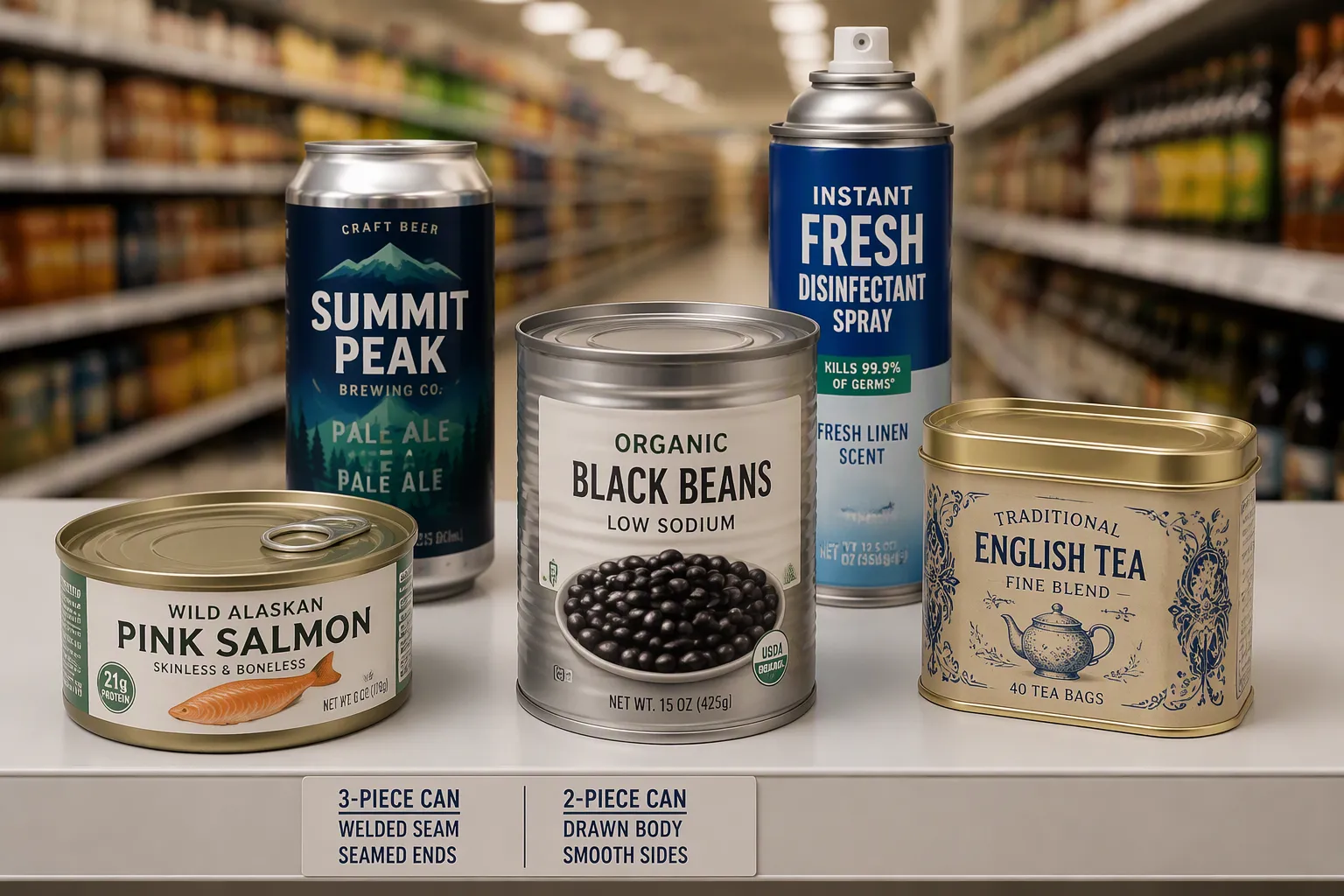
Walk down any grocery aisle and you will see many kinds of metal packaging. Food cans, easy-open ends, beverage cans, and specialty containers all use the same basic idea. A steel body holds the product, and a tight lid keeps it sealed. Each type just changes that idea to fit a different job.
Food, Beverage, and Specialty Containers
Food cans come in two main builds. A 3-piece can uses a welded body with two seamed ends, which allows flexible sizing and makes it a standard for many processed food formats. A 2-piece can is drawn from a single sheet, and makers match its linings to the food product being filled. Both builds show up across canned foods, from soup to fruit.
Metal Food Can Type | Construction | Notes |
|---|---|---|
3-piece can | Welded body with two seamed ends | Allows flexible sizing; standard for many processed food formats |
2-piece can | Drawn from a single sheet | Manufactured with linings matched to the food product being filled |
Beverage and specialty formats widen the picture. Cylindrical aluminum beverage cans offer a large printable surface and a wide range of sizes, shapes, and decorating options, which makes them ideal for brand presence on shelf. Aerosol cans, food cans, and promotional tins round out the list. Promotional tins often outlive the product inside, since people keep them for storage or as keepsakes.
AINISITEL supplies the parts that hold these formats together. The company makes bottom ends, easy-open ends (EOE), and lids in sizes from 52mm to 153mm, including popular models like 202#, 305#, 401#, and 602#. Internal lacquer options come in gold, white, aluminum, or clear. Six high-speed production lines handle precision stamping and automated body-making, and in-line inspection checks every seam. Buyers who want a complete can solution can source the body, the ends, and the lids from one place.
Recyclability and Sustainability
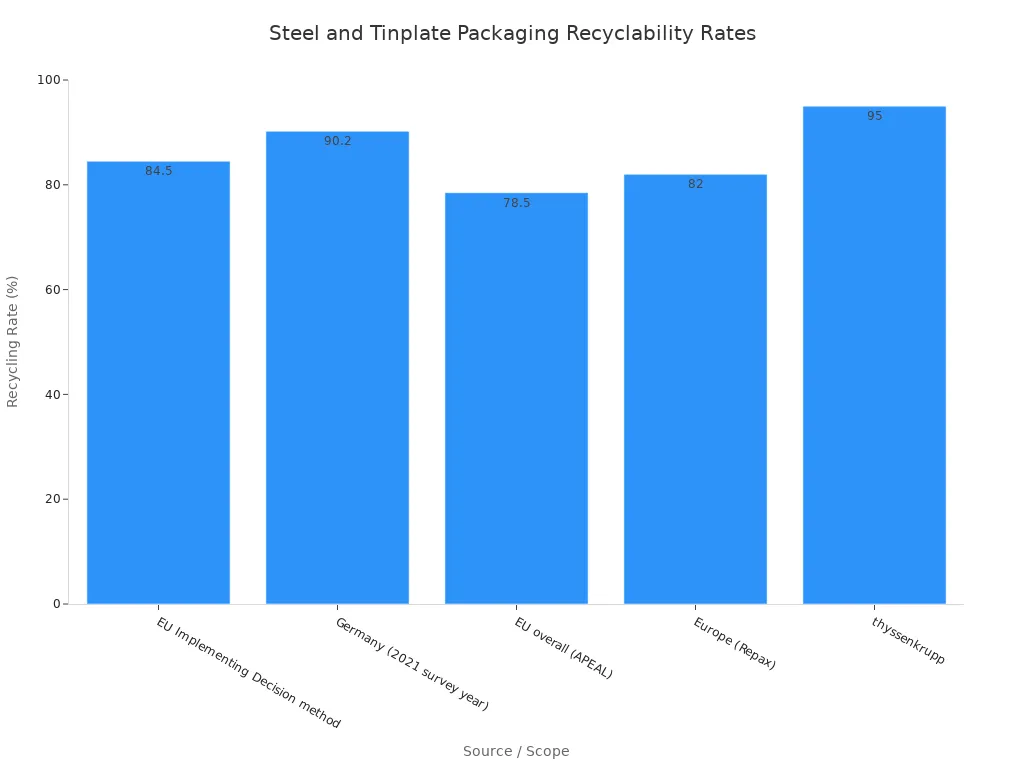
Steel and tin plate recycle well, and that fact supports sustainable packaging goals across the industry. Tinplate steel packaging is described as highly recyclable, with a recycling rate of 82% in Europe, positioning it as a key contributor to circular economy and sustainability efforts.
Tinplate steel packaging is described as highly recyclable, with a recycling rate of 82% in Europe, positioning it as a key contributor to circular economy and sustainability efforts.
The numbers back that up. Under the EU Implementing Decision method, tinplate reaches 84.5%. Germany hit 90.2% in its 2021 survey year, as stipulated by the German Packaging Act. APEAL puts the EU overall figure at 78.5%, and thyssenkrupp reports that 95% of tinplate packaging can be recycled. Germany has kept its rate above 90% for many years.
Tin and steel can be recycled again and again without quality loss. Roughly 80% of all tin ever produced remains in use today, which keeps material in the loop instead of in a landfill. That endless recyclability gives the sustainability of tin packaging a strong foundation.
Food waste tells the other half of the story. The world throws away about 1.3 billion metric tons of food each year, roughly one third of what it produces, and that waste generates 3.3 billion metric tons of CO2 annually. A good barrier fights back. Metal completely blocks light and oxygen, so it extends shelf-life and cuts spoilage. One estimate found that canning U.S. produce instead of refrigerating or freezing it would save about 7 million metric tons of food, equal to roughly 22 million metric tons of CO2.
Material | U.S. Recycling Rate | Key Sustainability Note |
|---|---|---|
Steel food cans | 58% | Recycled steel cuts GHG emissions by 75%; ~30,000 cans recycled/min |
Aluminum cans | 43% | 71% recycled content; back on shelves within 60 days |
Glass | 33.9% | Lower recycled content (23%) |
Cartons | 16% | — |
Plastic (PET) | 13% | Only 6% recycled content |
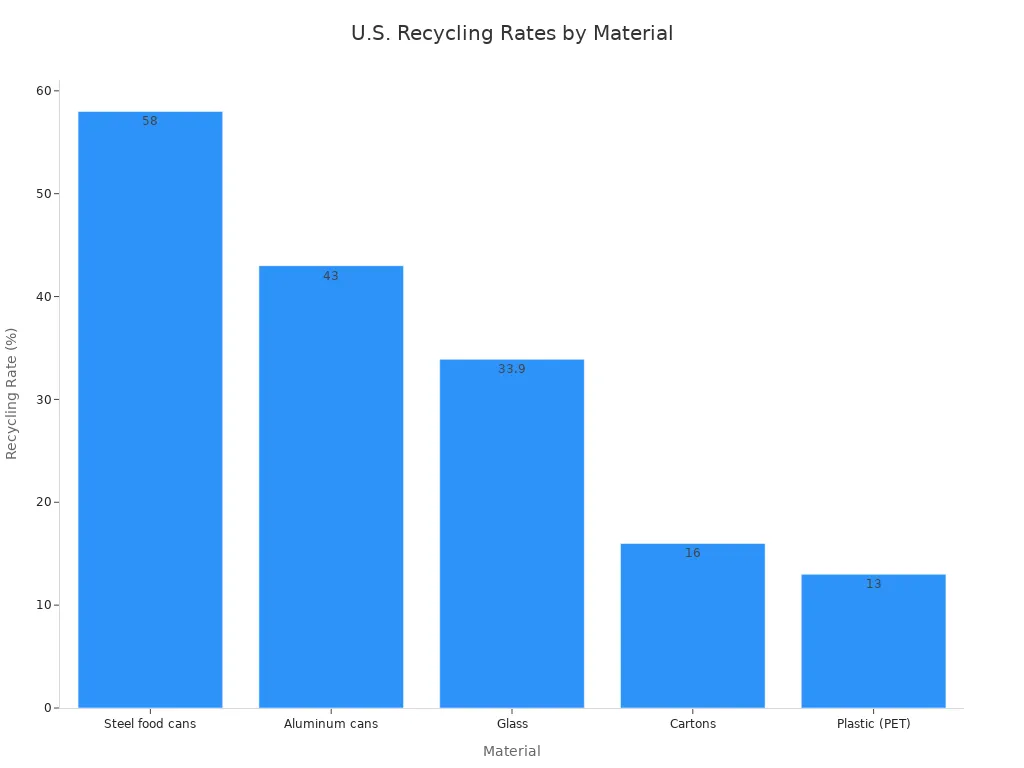
Steel food cans lead that U.S. list at 58%. Recycled steel cuts greenhouse gas emissions by 75%, and about 30,000 cans get recycled every minute. Lightweighting has trimmed steel can weight by 40% over 30 years, which lowers transport costs and the carbon footprint along the way.
A few more points round out the case for metal food packaging:
Endless recyclability: tin and steel recycle repeatedly without quality loss, and roughly 80% of all tin ever produced remains in use.
Reuse beyond the shelf: consumers repurpose tins for storage or keepsakes, which extends product life and brand visibility.
Lower-impact premium packaging: tins replace less sustainable plastics while offering durable branding through embossing and vibrant printing.
Cutting food waste via shelf-life: the barrier against light, oxygen, and moisture keeps food fresher longer.
Regulatory future-proofing: tin aligns with tightening global plastic bans and waste-reduction targets.
The global metal beverage can recycling rate sits near 69%, which makes it the most recycled beverage package. Recycling aluminum saves more than 90% of the energy needed for new production. Those figures show how metal cans fit into a circular system.
For brands, the takeaway is simple. Tin containers protect food, and they come back as new steel after use. That combination of barrier strength and recyclability keeps tin cans relevant in food packaging applications that demand both performance and responsibility. The same qualities carry over to canning lines everywhere, where tin plate and tinplate stock feed high-speed production day after day.
Tin earns its place in food packaging for four solid reasons. It keeps contents safe, since food-grade coatings stop any reaction with the metal. It preserves quality, because an airtight barrier locks out air, moisture, and light. It suits high-speed production, where tin plate forms, prints, and seals with ease. It also recycles again and again without losing quality.
Those strengths make tinplate a dependable pick for direct contact and long storage. Tin plate cans hold tuna, fruit, and coffee for years, and metal cans keep flavor intact along the way. Brands choose tinplate for shelf-life they can count on. Tin plate simply works, and that is why so many food cans still leave the line.
FAQ
What makes tin plate safe for direct food contact?
Makers coat the steel with a food-grade lacquer. That layer keeps the metal away from the contents. Tin itself is non-toxic and does not react with acidic or salty foods. AINISITEL can products use food-grade coatings and meet food safety standards.
How long does food last in tin plate cans?
An airtight double seam locks out air, moisture, and light. That barrier gives tin plate cans a shelf-life of up to five years for tuna, meat, fruits, and vegetables. Plastic packaging for the same products usually lasts one to two years.
Which can formats does AINISITEL supply?
The company makes bottom ends, easy-open ends, and lids from 52mm to 153mm, including 202#, 305#, 401#, and 602# models. Six high-speed lines handle stamping and body-making. Buyers can source bodies, ends, and lids as a complete solution.
When should a buyer pick TFS instead of tinplate?
TFS suits crown caps, twist-off caps, and deep-drawn food cans. It offers strong lacquer adhesion and heat resistance at a lower cost. Tinplate still leads where corrosion resistance and formability matter most. Each material fits its own job.
Do tin cans recycle well?
Yes. Steel and tin plate recycle repeatedly without quality loss. Tinplate steel packaging reaches an 82% recycling rate in Europe. That keeps material in the loop and supports circular economy goals. Metal cans remain a responsible packaging choice.