
What Types of Can Ends Are Used for Food Packaging?
 Oct 19, 2026|
 View:31
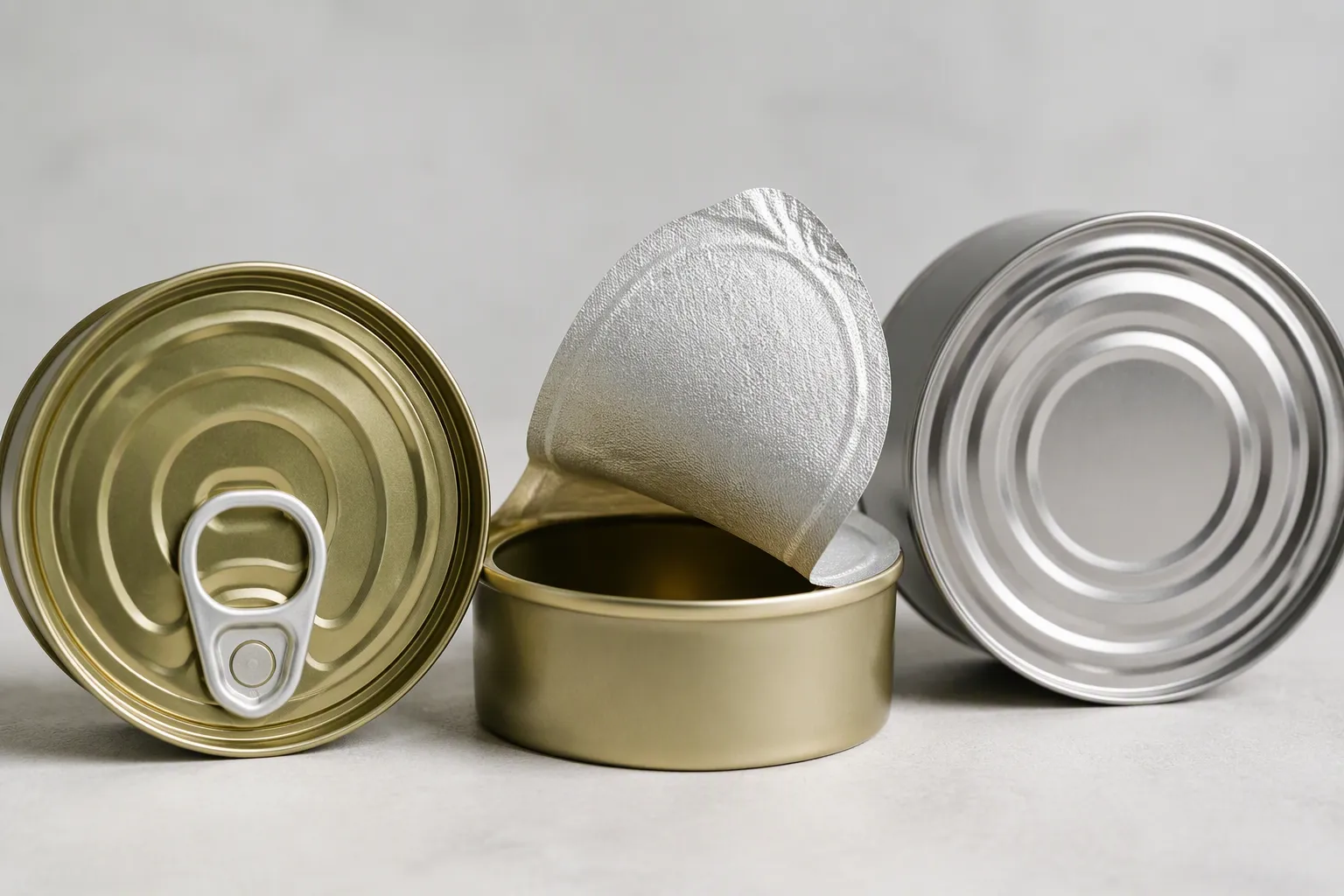
Food packaging uses several main types of can ends: standard (sanitary) ends, easy-open ends (EOE), full-aperture ends, peel-off ends, retort and easy-peel retort ends, and beverage ends. Each type works best for a different product and filling line.
Four differences matter most. The opening method shapes how people get to the contents. Material matters, because aluminum, tinplate, and TFS act differently with acidic or retorted foods. Size must match the can body diameter exactly. Product compatibility covers coating choice and process conditions.
This comparison focuses on the best use for each design. It helps packaging teams choose Can Ends with confidence and buy them using clear, practical criteria.
Key Takeaways
Choose the can end type based on how people will open the can and what food it holds.
Match the end material to the food and the sterilization process to prevent spoilage.
Always confirm the end size with the can body specification and a trial seam.
Check that the supplier provides food-grade coatings and follows quality standards.
Work with a supplier who offers stock, custom options, and clear lead times for a smooth order.
Main Types of Can Ends
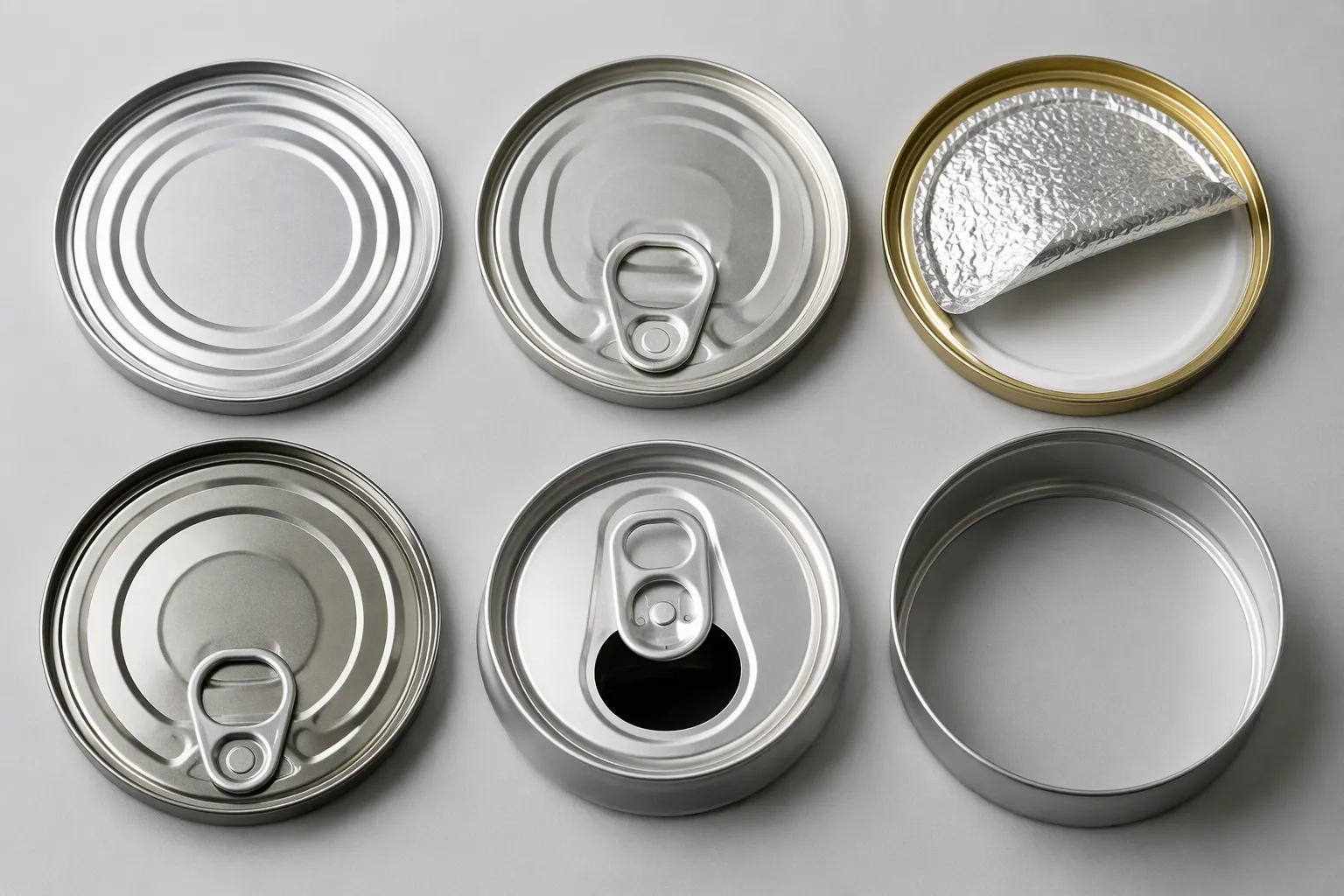
Standard, Easy-Open, Peel-Off, and Retort Ends
A standard end is the traditional flat lid. People also call it a sanitary end or B64. It has no opening feature, so consumers open it with a can opener. This design seals reliably on many filling and seaming lines. It works well for canned vegetables, fruits, seafood, meat, and ready-to-eat meals. These products care more about cost and a tight seal than about convenience.
An easy-open end (EOE) has a scored panel and a riveted tab. The user pulls the tab, and the score tears along a set path. General EOE usage covers canned soups, sauces, vegetables, and fruits. The lid gives easy access and still keeps food fresh and nutritious. Peel-off ends (POE) use a foil or membrane lid that lifts away in one piece. They show up on canned fruits and pet food, where a clean, wide opening helps with serving.
Retort ends must survive the heat and pressure of in-container sterilization. A retort EOE pairs a pressure-resistant panel with a working pull tab. Easy-peel retort ends add a peelable membrane for products like ready meals and pet food. These ends need careful coating selection, because the internal lacquer must hold up through the retort cycle.
Beverage Ends and Full-Aperture Ends
Beverage ends use a stay-on tab (SOT). The tab stays attached to the lid after opening, which prevents litter. SOT ends come in several diameters, including #200, #202, #206, and #209. The #200 slim can often pairs with a small opening end, and that restricted aperture suits strong drinks like cold brew coffee, energy shots, and high-ABV canned cocktails. Larger-opening variants improve flow rate for aromatic beverages.
Full-aperture ends, also called 360 ends, remove the entire lid. The can then works like a cup or bowl. Crown's 360 End® lets drinkers sip beer much as they would from a glass, which keeps aroma and carbonation. Food applications include nuts, coffee powder, milk powder, olives, mushrooms, tuna, beans, and tropical fruit cocktails with whole fruit slices or tapioca pearls.
CDL ends serve larger cans and pressure-sensitive products. The reverse-countersunk double-curl profile adds stiffness. At the 202 size, a CDL lid weighs about 2.49 g against roughly 2.74 g for a B64 lid, a 10–15% metal saving. CDL also uses a thicker gauge range of 0.24–0.28 mm versus 0.22–0.24 mm for B64, and it resists burst pressure at ≥90 PSI against ≥85 PSI for the lighter B64 profile.
End Type | Opening Method | Typical Food Applications |
|---|---|---|
Standard / sanitary (B64) | Can opener | Vegetables, fruits, seafood, meat, ready meals |
Easy-open end (EOE) | Pull tab, scored panel | Soups, sauces, vegetables, fruits, seafood |
Peel-off end (POE) | Peelable membrane | Canned fruits, pet food |
Retort / easy-peel retort | Pull tab or peel membrane after sterilization | Ready meals, pet food, retorted foods |
Beverage end (SOT) | Stay-on tab | Beer, soft drinks, coffee, cocktails |
Full-aperture (360) | Whole lid removed | Nuts, coffee, milk powder, olives, fruit cocktails |
CDL | Pull tab, reverse countersink | Carbonated drinks, larger pressure-sensitive cans |
Food cans are built as two-piece or three-piece bodies. A two-piece can has a built-in bottom, so it needs one end. A three-piece can needs a top and a bottom. End choice follows that construction, and buyers should confirm the body type before ordering Can Ends.
Can Ends by Opening Method
Pull-Tab, Full-Aperture, and Peel-Off Styles
A pull-tab end has a riveted tab and a scored panel. The user lifts the tab, and the score tears along a set path. There are two tab designs, and they work in different ways:
SOT (Stay-on-Tab) keeps the tab attached after opening for safety and recycling, while RPT (Ring Pull Tab) takes the tab off completely for a traditional opening.
The stay-on design leaves a smaller, controlled opening. It works well for beverage cans, where drinking straight from the can matters most. The ring-pull design feels more traditional and works well on food cans.
A full-aperture end opens a much larger part of the lid. The user gets wide access to the inside of the can, which makes pouring, scooping, and emptying easy. This style fits solid or chunky foods, such as fruit slices, olives, and tuna.
A peel-off end uses a foil or membrane lid. The user lifts a flexible tab, and the membrane peels away in one piece. These ends work for many dry and semi-solid products:
Snacks, nuts, and coffee
Powdered drinks and infant formula
Soup and sauce mixes
Spices, noodles, and rice
Pet food and treats
Matching Opening Style to Product and User
The right opening style depends on the contents and how people use them. A full-aperture end makes sense when the product has larger pieces or when easy emptying is a priority. A partial-aperture end fits when a controlled opening is preferred or part of the end should stay attached.
What is inside the can guides the choice. Liquids, powders, and small pieces pass easily through a limited opening. Larger solids need more room. Intended use matters too. Consumers may drink, pour, scoop, or remove contents directly, and each action favors a different design.
Handling after opening deserves attention. A wide opening lets air and moisture reach the contents, so products stored after opening may favor a smaller aperture. Package integrity also counts. Every end must match the can body and the sealing process. These factors help buyers compare Can Ends on fit rather than on rank.
Materials for Food Can Ends
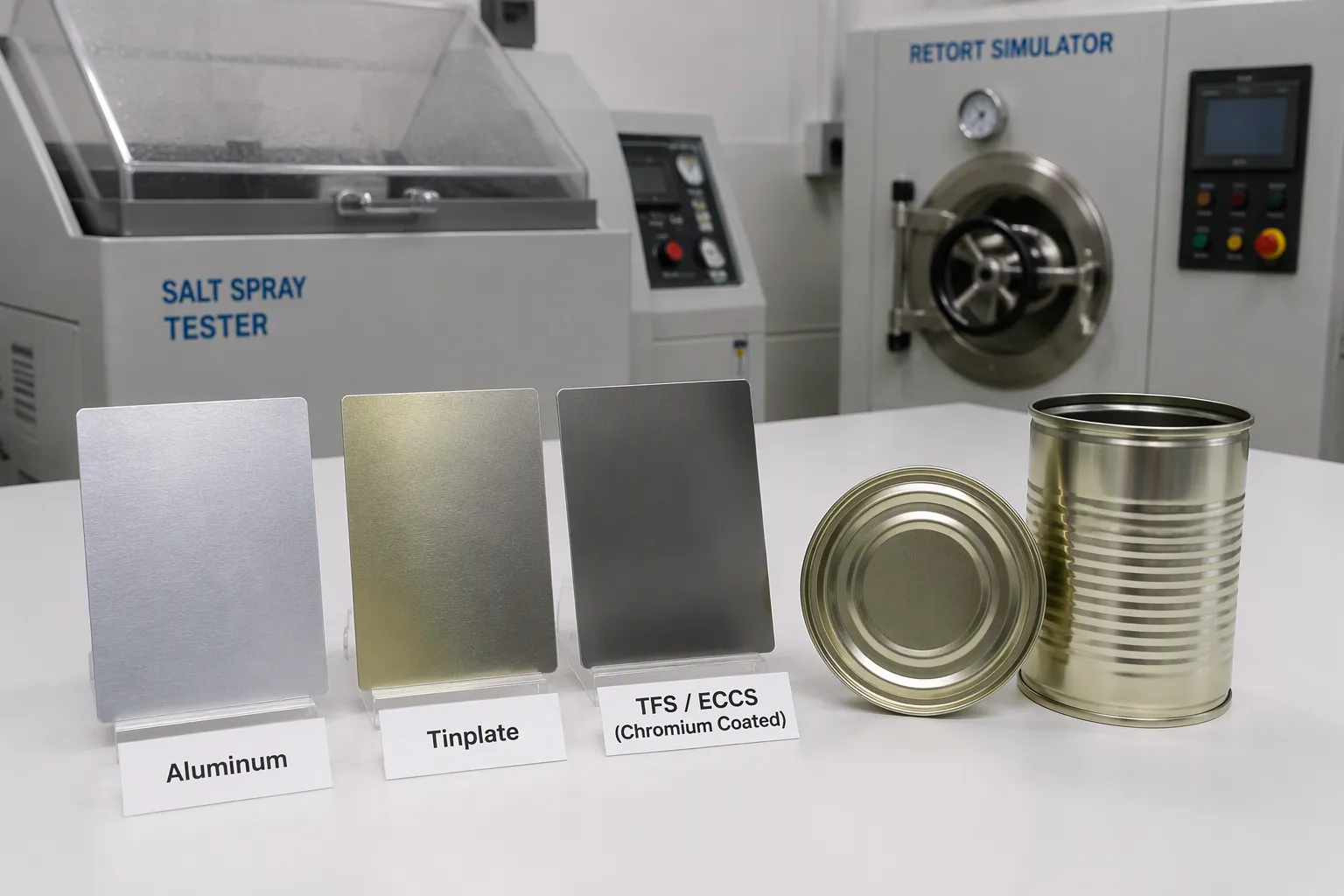
Aluminum, Tinplate, and TFS/ECCS
The metal you pick changes how the can resists rust, how coatings stick, and how the part is formed. Each metal gives the finished part its own surface traits.
Aluminum sheet blocks light and oxygen very well once it is coated. It keeps taste neutral when lined properly and takes lacquer and ink easily. Aluminum cannot be soldered, so makers join it with glue or mechanical methods. Draw-and-iron (DWI) can bodies and light lids are where it fits best.
Tinplate puts a tin coating over low-carbon steel. The tin layer resists rust on its own and allows soldering, which suits soldered-seam bodies and open-coat interiors. Tin can react and change color when it meets foods that contain sulfur, so the recipe and coating choice matter.
TFS, also called electrolytic chromium coated steel (ECCS), uses a chromium and chromium oxide surface instead of tin. That oxide layer holds organic coatings very well and strongly resists sulfur stains. TFS cannot be soldered, and it usually serves lacquered ends, lids, peel-off membranes, and closures rather than can bodies.
Tinplate (ETP) is coated with tin, which gives better rust resistance and food safety. Tin Free Steel (TFS) uses a chromium coating and is usually used for can ends or lids rather than can bodies.
Rust resistance is a system result: the metal, chromium layers, organic coatings, cure, and forming all interact. Suppliers test candidates with fast tests before committing to production:
Neutral salt spray exposure checks pinholes and edge creep under chloride load; passing means no blistering and no red rust on coated areas within the set period.
SO2 (Kesternich) cycles stress condensation and acidic air; passing means no underfilm corrosion or edge lift around scribes.
Retort simulation at 121°C or per process copies the heat and chemical load; passing means no staining, blistering, or pitting after cycles with adhesion intact.
Immersion in food simulants or actual product checks for color change or metal taste after a set dwell.
Crosshatch adhesion plus tape checks cure and anchorage; passing means strong adhesion with little or no coating removed.
AINISITEL ETP/TFS for Can End Production
AINISITEL supplies electrolytic tinplate and TFS in coils and sheets through its ETP/TFS process. Thickness runs from 0.14 to 0.55 mm, with T1–T5 and DR grades available. Buyers can ask for many tin coatings and surface finishes, including bright, stone, silver, and matte. Raw material comes straight from Baosteel, and the company keeps over 10,000 metric tons in stock for fast delivery.
Material selection does not stop at the metal. Food-grade coatings and internal lacquer options complete the spec. Gold, white, and aluminum lacquers each change the inside look and the barrier a product sees. A sulfur-rich recipe may need a different lacquer than a mild fruit fill. Teams that match metal, coating, and lacquer together make Can Ends that seal well and protect the contents through storage.
Sizing and Selection Steps
Common Diameters and Can Body Fit
End size must match the can body. A mismatch between the end curl and the can-body flange causes the seam to fail, and the can will not seal. Common end codes include 202#, 305#, 401#, 601#, and 602#. Each code describes a specific diameter, and each one pairs with a defined range of can bodies.
End size | Fits can type |
|---|---|
200 / 202 | Slim and standard cans |
206 | Some wider cans |
300 | 32 oz crowler |
A 202 end suits 12 oz and 16 oz cans, while a 300 end suits crowlers. Buyers should start from the can body's seaming-end specification code and drawing. Capacity alone does not confirm fit. The opening inside diameter and a single caliper reading also fall short as checks. A trial seam on the actual body gives the real answer.
A Step-by-Step Selection Checklist
A structured review keeps the specification tight. The steps below cover the main decision points for Can Ends.
Match the end to the product and opening preference. Standard ends need a can opener, standard easy-open ends open part of the panel, full-aperture ends remove most or all of it, and peel-off ends use a sealed film.
Select the material from the food and the end design. Tinplate, TFS, and aluminum each suit different products and heat-processing conditions.
Determine the size from the can body specification, then confirm it with a trial seam.
Verify compatibility with the can body and the seaming equipment before production.
Confirm the recommendation with the supplier, including coating documents, batch quality, MOQ, stock, and lead time.
Product traits shape the choice as well. Teams should note whether the fill is pourable, squeezable, or dry, and whether it reacts with oils or acids. Light, air, and moisture sensitivity matter. Shelf-life targets, tamper-evident needs, and brand finishes such as color matching or embossing round out the checklist.
Buying Can Ends from Suppliers
Quality, Coating, and Certification Checks
A good supplier answers tough questions before an order ships. Buyers should ask how the plant checks that lids seal tight. Seam inspection is destructive by nature: a sample can is cut open, and a projector or scanner measures cover hook, body hook, overlap, and wrinkle rating. Overlap is the most critical dimension for a hermetic seal, and wrinkles create leak paths. Other checks do not destroy the sample. Pressure decay, vacuum decay, bubble emission, and dye penetration tests reveal score fractures, leakers, and coating defects without scrapping the sample.
Coating compliance deserves the same close look. Buyers should request food-grade coating documents and confirm that internal lacquer options match the fill. They should also ask which international standards the plant follows and how in-line inspection catches defects such as tab detachment, panel buckling, or surface scratches. A supplier that tracks these points through production gives buyers a paper trail for food safety and HACCP programs.
AINISITEL Support, Volume, and Lead Time
AINISITEL runs six high-speed dedicated lines and covers a full size range, including 202#, 305#, 401#, 601#, and 602#. Precision stamping, automated body-making, and in-line inspection help keep sealing integrity consistent. Buyers can request customizable printing and internal lacquer options in gold, white, or aluminum to match branding and product needs.
Order volume, lead time, and cost move together. Larger runs usually lower the unit cost, and stock availability shortens delivery. AINISITEL holds over 10,000 metric tons of ETP and TFS in stock, which supports fast shipment for standard specifications. Custom printing and coating add production steps, so buyers should confirm timing early. Teams ready to specify Can Ends can contact AINISITEL for samples or a quote based on their product, size, and coating requirements.
The right choice comes down to four matches. The end type should fit how people open the can. The material should suit the product and the process. The size should match the can body. And the supplier should meet your quality and volume needs. No single design wins everywhere. A standard end suits cost-focused lines. An easy-open end suits everyday convenience. A full-aperture end suits chunky foods. Each type serves a specific use case well.
Packaging teams can contact AINISITEL for samples or a quote. Share the product, size, and coating needs. Then the team will recommend suitable Can Ends.
FAQ
How does a buyer choose between a standard end and an easy-open end?
The choice depends on how the product needs to be opened. A standard end works well for cost-focused lines and products sold for kitchen use with a can opener. An easy-open end adds pull-tab convenience for soups, sauces, and everyday retail items. Both seal reliably when the end matches the can body.
Can one end size fit every can body?
No. Each end code matches a set range of can bodies. A 202# end fits slim and standard cans, while 401#, 601#, and 602# ends serve larger formats. Buyers should confirm the body's seaming specification and run a trial seam before production.
Which ends work for retorted foods?
Retort ends must survive in-container sterilization. A retort easy-open end pairs a pressure-resistant panel with a working tab. Easy-peel retort ends add a peelable membrane for ready meals and pet food. The internal lacquer must hold up through the retort cycle, so coating selection matters as much as the metal.
Which internal lacquer should a buyer specify?
The fill decides the lacquer. Gold, white, and aluminum lacquers each change the inside look and the barrier the product sees. A sulfur-rich recipe may need a different lacquer than a mild fruit fill. Suppliers can confirm food-grade coating documents for each option.
How do buyers request samples or a quote?
Buyers share the product, the end size, the process (retort or not), and the coating preference. AINISITEL then recommends suitable Can Ends. Stock of over 10,000 metric tons of ETP and TFS supports fast shipment on standard specifications, and custom printing or coating adds production steps worth confirming early.